What It Actually Takes to Get 50 Balloons Airborne at the Same Time
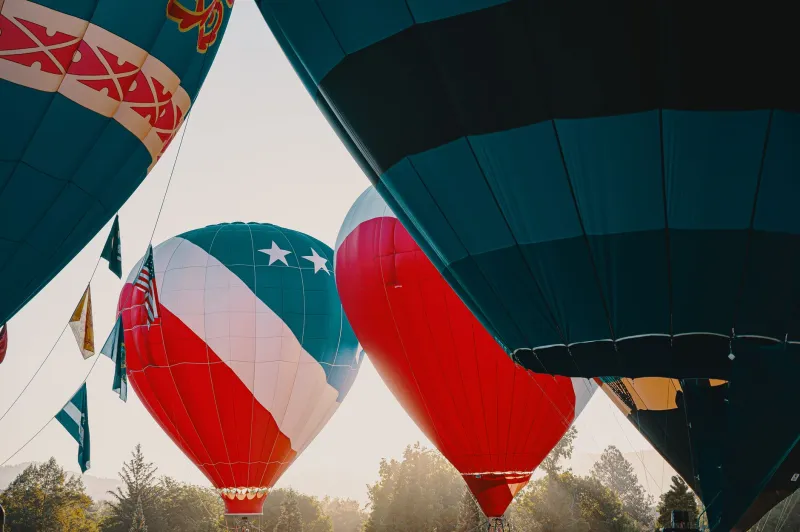
If you've ever stood on a festival field at dawn, watching balloon after balloon rise into a pink-streaked sky, you already know the feeling. It's one of those rare moments that stops people mid-sentence and makes everyone reach for their phone at the same time. But here's what most spectators never think about: that beautiful chaos is anything but chaotic. Getting dozens of balloons into the air within minutes of each other is one of the most precisely coordinated acts in outdoor entertainment — and the people pulling it off make it look effortless.
We dug into the behind-the-scenes mechanics of mass balloon launches, talking to festival organizers and experienced pilots about what it really takes to make those sky-filling moments happen.
It All Starts Way Before Launch Day
The planning for a mass launch begins weeks — sometimes months — before the first envelope ever gets unpacked. Festival directors work closely with a designated launch director, often a seasoned pilot with years of large-event experience, to map out field positioning, crew assignments, and contingency plans.
"You're essentially choreographing a ballet where every dancer weighs several hundred pounds and responds to the wind differently," says one veteran launch director who has overseen events across the Southwest. "The field layout alone can take days to finalize."
Pilots are assigned specific grid positions on the launch field based on balloon size, envelope color (for visual sequencing), and each pilot's experience level. Newer pilots are typically positioned toward the interior of the grid where conditions are slightly more predictable, while veterans often anchor the edges where wind behavior can be trickier.
Weather Is the Real Boss
No amount of planning overrides Mother Nature, and every experienced balloon pilot will tell you the same thing: the sky gets the final vote. Mass launches require a very specific weather window — typically winds at or below 8 to 10 mph at ground level, with stable upper-level conditions and no significant weather systems within range.
Festival meteorologists (yes, some larger events hire dedicated weather consultants) begin monitoring conditions 48 to 72 hours out. On launch morning, readings are taken every 30 minutes starting around 4 a.m. A pibal — a small helium balloon released into the air — is one of the most low-tech but reliable tools in the toolkit. Watch where it drifts, how fast it climbs, and whether it holds a consistent direction, and you get a real-time read on what the atmosphere is doing at different altitudes.
"People always ask why we launch at sunrise," notes one festival operations coordinator based in the Midwest. "It's not just for the pretty light, though that doesn't hurt. The air is genuinely more stable in the early morning. Surface heating hasn't kicked in yet, so the wind is calmer and more consistent. By 10 a.m., conditions can shift dramatically."
The Radio Net: How 50 Pilots Stay in Sync
Once the launch window is confirmed, communication becomes everything. Most large festivals operate on a dedicated radio frequency — the "launch net" — that connects the launch director, all participating pilots, safety officers, and ground crew leads. The protocol is strict: no unnecessary chatter, clear call signs, and a structured check-in sequence before any envelope goes up.
The launch sequence itself often unfolds in waves rather than a single simultaneous release. The first group of balloons — usually 8 to 12 — begins inflation while the rest of the field holds. This staggered inflation approach prevents crews from crowding each other and gives the launch director a chance to assess how the first wave behaves before committing the rest of the field.
"You're watching everything at once," explains one pilot who has participated in mass launches at several major regional festivals. "You're listening to the radio, watching your own envelope, watching the balloon next to you, and you've got one eye on the launch director the whole time. It sounds overwhelming, but when the crew is trained and everyone knows their role, it flows."
The actual liftoff signal — often a colored flag drop or a specific radio call — triggers a rolling launch that, from the spectator side, appears nearly simultaneous. In reality, pilots are lifting off within a window of two to five minutes of each other, which is tight enough to create that iconic sky-full effect without turning the launch field into a collision risk.
When Things Don't Go According to Plan
Even the best-run festivals hit unexpected snags. A sudden wind shift can ground half the field mid-launch. A balloon with a minor equipment issue might need to stand down at the last second. Spectators might not realize that the balloon that stayed earthbound while its neighbors floated away wasn't a malfunction — it was a pilot making a smart, safety-first call.
"The hardest part of this job is telling a pilot to hold when they're fully inflated and ready to go," says one launch director. "But a 15-minute delay beats a mid-air incident every single time. The crowd understands more than people think — they've just watched you safely launch 40 other balloons. They get it."
Abort protocols are rehearsed well in advance. Crews know how to deflate quickly and safely, pilots know the communication chain for reporting issues, and safety officers are positioned throughout the field with clear sightlines to every balloon.
Why It's Worth Every Bit of the Effort
For all the logistics, early mornings, weather anxiety, and radio coordination, the people who run these launches will tell you the payoff is immediate and undeniable. There's a collective gasp that moves through a festival crowd when the sky starts to fill — a sound that doesn't happen at many other live events.
That reaction is exactly why festivals keep investing in the infrastructure to make mass launches bigger and more polished every year. It's the moment that ends up in every photo album, every social media reel, every "you had to be there" conversation afterward.
Next time you're standing on a launch field watching the sky come alive, take a second to appreciate the army of people who made it look that easy. The balloons are beautiful, sure — but the teamwork underneath them is pretty stunning too.
Planning to catch a mass launch this season? Check out our festival calendar at srfballoonfestivals.com to find events near you.