One Weekend, Millions of Dollars: The Surprising Economic Power of Balloon Festivals in Small-Town America
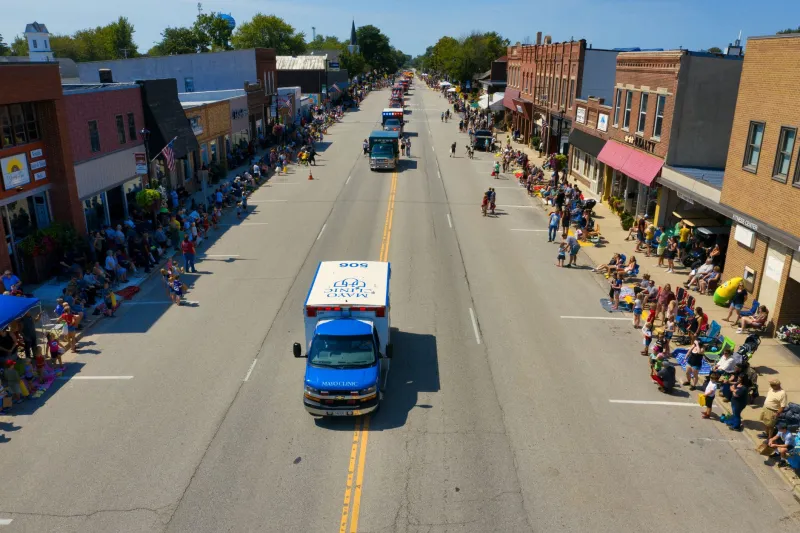
Picture a quiet Friday morning in a town of maybe 8,000 people. The grain elevator is humming, the diner has its regulars, and the motel off the highway has a handful of trucks in the lot. Now fast-forward 48 hours. That same motel has a "No Vacancy" sign flickering in the window, the diner has a line out the door, and somewhere on the edge of town, 40 hot air balloons are inflating against a pink sunrise while 20,000 people watch with their phones in the air.
That's not a fantasy. That's a balloon festival weekend — and for a growing number of small American towns, it's also the most profitable 72 hours of the year.
The Numbers That Actually Move the Needle
Let's talk dollars. According to data gathered by regional tourism boards across the Midwest and Southeast, a mid-sized hot air balloon festival — one that draws between 15,000 and 30,000 attendees over a weekend — can inject anywhere from $2 million to $6 million into a local economy. That's not a typo.
Those figures come from a combination of direct spending (tickets, food, merchandise) and what economists call the "multiplier effect" — the way tourist dollars circulate through a community before they leave it. A visitor buys breakfast at a local diner. The diner owner pays her weekend staff extra hours. Those employees fill up their gas tanks at the station down the street. The station owner restocks from a local supplier. The money keeps moving.
Festival organizers in places like Walla Walla, Washington, and Statesville, North Carolina, have tracked these ripple effects closely. "We started doing exit surveys about four years ago," said one festival director in central Tennessee who asked to remain unnamed ahead of their upcoming event announcement. "The average out-of-town visitor spends about $280 over the weekend, not counting their ticket. That adds up fast when you've got 25,000 people showing up."
Hotels, Motels, and the Blessed "Sold Out" Sign
For lodging businesses within a 30-mile radius of a balloon festival, the weekend is often a financial lifeline. Independent motels — the kind that struggle to compete with chain hotels during a normal week — frequently report occupancy rates hitting 100% for the two or three nights surrounding a major event.
Darlene Hutchins, who runs a 22-room motel outside a small festival town in Missouri, described the transformation bluntly. "We do in three nights what it normally takes us a month to do. I've got repeat guests who book the same room every single year, same weekend, like clockwork. Some of them have been coming for a decade."
That kind of loyalty is what separates balloon festivals from one-off events. The best ones build a following that returns annually, and that predictability lets local business owners plan ahead — hiring seasonal staff, ordering extra inventory, and making capital improvements in anticipation of the influx.
Restaurants, Food Vendors, and the Art of the Upsell
The food economy around a balloon festival is its own fascinating ecosystem. On one side, you've got the festival vendors — funnel cake stands, BBQ pits, craft beer tents — who pay for booth space and bring in revenue that often goes directly to the organizing nonprofit or local civic group running the event. On the other side, you've got the restaurants and cafes in town that suddenly find themselves slammed.
"We added two extra staff for both Saturday and Sunday and we still couldn't keep up," said Marco Delgado, owner of a Mexican restaurant in a small Kansas town that hosts an annual balloon glow event. "We ran out of three menu items by noon on Saturday. I've never done that before in 11 years of business."
Delgado said he now treats the balloon festival weekend as a separate planning exercise — a mini business season unto itself. He orders double the usual supplies, adjusts his menu to favor high-margin, quick-prep items, and uses the weekend's cash flow to cover slower months in early spring.
The Tax Revenue Nobody Talks About
Beyond individual business owners, there's a layer of economic benefit that often flies under the radar: tourism tax revenue. Most counties in the US collect a hotel occupancy tax and, in some cases, a sales tax on event tickets and goods. During a balloon festival weekend, those collections can spike dramatically.
In one rural Virginia county, the local tourism authority reported that a single balloon festival weekend generated nearly $140,000 in lodging tax revenue alone — funds that go directly toward marketing the region to future visitors. It's a self-reinforcing cycle: the festival draws tourists, the tourists generate tax revenue, that revenue funds marketing, which draws more tourists to future festivals.
County commissioners in festival-hosting communities have increasingly started factoring these events into their annual budget projections. What was once seen as a quirky community celebration is now being treated as a legitimate economic development strategy.
Jobs That Actually Show Up
Beyond the revenue, there's the job creation angle — and it's more significant than most people realize. A large balloon festival requires hundreds of workers: parking attendants, security personnel, ticket scanners, vendor staff, grounds crew, and the specialized balloon crews themselves. Many of these positions go to local residents, offering a concentrated burst of employment that can meaningfully offset seasonal unemployment in agricultural communities.
Festival organizers often partner with local high schools, church groups, and civic organizations to staff volunteer roles, with those groups receiving a portion of the proceeds. It's a model that distributes the economic benefit broadly rather than concentrating it among a small group of vendors.
Why This Matters for the Future of Rural America
There's a bigger story here that goes beyond weekend revenue. Rural communities across the US are fighting hard to stay relevant in an economy that increasingly rewards density and connectivity. Young people leave. Businesses close. The tax base shrinks. It's a familiar and painful cycle.
Balloon festivals don't solve all of that. But they do something important: they put a town on the map, even briefly, and they give residents something to be proud of. They attract media coverage. They bring in visitors who might never have had a reason to stop otherwise — and some of those visitors come back, invest, or simply spread the word.
"People ask me why I keep doing this — it's a lot of work for a weekend," said one longtime festival organizer in rural Georgia. "I tell them: because for two days, our little town is the center of the universe. And that matters more than people think."
At Sky Rise Festivals, we've seen this story play out across dozens of regional events. The balloons get the attention. But it's the communities underneath them that quietly do the heavy lifting — and reap the rewards.