Hear That? Decoding the Radio Chatter That Keeps Balloon Festivals Running
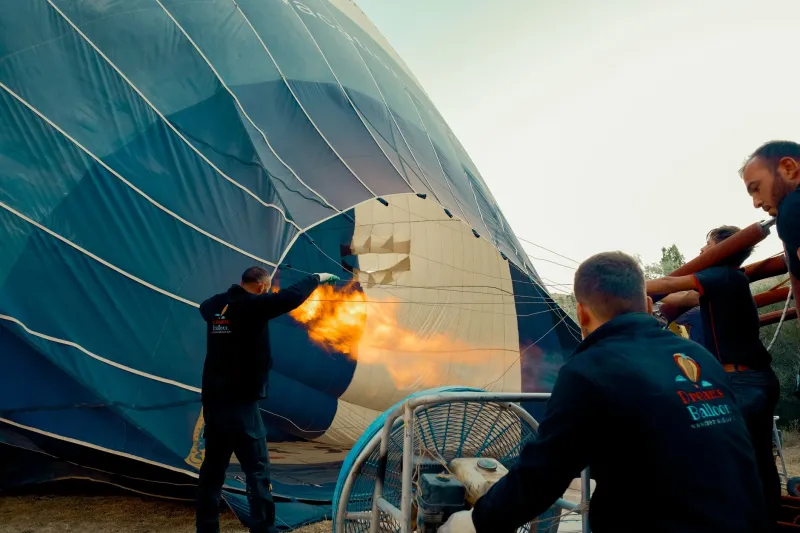
You're standing in a field at six in the morning, coffee in hand, watching an army of crew members wrestle giant envelopes of nylon into shape while pilots pace around clutching handheld radios. Every few seconds, a burst of static. A clipped phrase. A response you can't quite make out. Then another balloon climbs into the pink sky like it was always supposed to be there.
What's actually being said on those radios? And who's talking to whom? As it turns out, the communication web running beneath every great balloon festival is just as impressive as the spectacle above it. Here's what's really going on.
The Chain of Command in the Air
Before a single burner fires, there's a structure in place. Most large-scale balloon events operate with a designated Launch Director—sometimes called the Launch Master—who has final authority over when pilots are cleared to inflate and lift off. Think of them as air traffic control, ground crew commander, and safety officer rolled into one person with a very busy radio.
Pilots check in with the Launch Director on a shared frequency, and that channel stays active throughout the entire flight window. When you hear someone call out "Sky Rise One, you're clear to inflate," that's the green light a pilot has been waiting for. Nothing moves without it.
Beyond the Launch Director, many festivals also coordinate with local FAA Flight Service Stations, especially when the event airspace intersects with nearby airports or controlled zones. That layer of communication happens on separate frequencies and is typically handled before the public ever shows up.
What Pilots Say to Each Other
Here's where it gets genuinely interesting. Once balloons are airborne, pilots communicate with each other to share real-time conditions—wind shifts, unexpected turbulence pockets, or obstacles that weren't visible from the ground. The phrasing is deliberate and efficient, because nobody wants to fumble through a long explanation at 1,500 feet.
Some terms you'd hear on a festival frequency:
- "Lifting nicely" — The balloon is ascending smoothly, wind is cooperative. Good news.
- "Scratchy at altitude" — Turbulence or inconsistent wind above a certain elevation. A heads-up for nearby pilots.
- "Backing" — The wind direction is shifting counterclockwise. This matters a lot for landing planning.
- "Veering" — The opposite: a clockwise shift. Both "backing" and "veering" are borrowed from traditional meteorological language, and balloon pilots use them constantly.
- "On the deck" — Flying very low, often intentionally to catch a slower wind layer near the ground.
- "Chase, do you copy?" — A pilot calling their ground crew vehicle. The chase crew follows the balloon by road and handles the retrieval after landing.
That last one is worth its own section, because the pilot-to-chase-crew relationship is basically the backbone of every flight.
The Chase Crew: Unsung Heroes on the Ground
Every balloon at a festival has a chase crew—usually two to four people in a truck or van loaded with the retrieval equipment. Their job is to track the balloon's path, anticipate where it's going to land, and get there before (or right as) it touches down. Sounds simple. It is absolutely not simple.
Chase crews navigate rural roads, private property, and unpredictable terrain while keeping one eye on a balloon that can drift several miles in under an hour. The radio dialogue between pilot and chase is a constant negotiation.
"We're drifting south-southeast, probably coming down near that tree line. Can you get eyes on a field past the grain elevator?"
"Copy that. We're on County Road 12, I can see you. Field looks clear, no power lines on the east side."
"Perfect. We'll aim for that. Stand by."
This back-and-forth happens in real time, and it requires the chase crew to be genuinely good at reading maps, communicating calmly under pressure, and sometimes sweet-talking a farmer into letting a 60-foot balloon land in their soybean field. (Landing permission is a real thing, and most pilots are remarkably good at this.)
Weather Calls and the Decision to Scrub
One of the most important—and least glamorous—radio conversations at any festival is the one that ends in a scrub. When conditions deteriorate, the Launch Director has to make the call to hold or cancel a flight window, and that message goes out across the entire pilot frequency.
"All pilots, hold inflation. We've got a wind shift coming through from the northwest, Launch is on hold until further notice."
No argument. No negotiation. Pilots acknowledge with a simple "Copy" or their balloon number, and everyone waits. The culture in the balloon community around weather decisions is genuinely healthy—experienced pilots don't push back on holds because they've seen what happens when someone does. Weather wins every time.
If conditions improve, the Launch Director reassesses. If they don't, the session is scrubbed and the crew starts the process of packing up, which is its own coordinated operation.
What Spectators Can Actually Tune Into
Here's a fun tip for your next festival visit: many balloon events operate on frequencies that are technically accessible to the public. A basic handheld scanner or even some radio apps can pick up the chatter on common VHF frequencies. Check with the festival organizers—some events actually encourage this and will list the frequency in their program guide.
Listening in adds a completely different dimension to watching a mass ascension. Suddenly those colorful shapes drifting overhead aren't just pretty—they're part of an active, coordinated conversation happening in real time. You'll hear the Launch Director clear balloons one by one, pilots calling out their positions, and chase crews reporting road conditions. It turns a passive experience into something more like being inside the operation.
The Human Side of All That Jargon
Strip away the technical vocabulary and what you've got is a community of people who genuinely trust each other. The radio communication at a balloon festival isn't just procedural—it reflects a culture built on mutual accountability. Pilots look out for other pilots. Chase crews share information across teams when it helps. Launch Directors make tough calls knowing the whole field is listening.
Next time you're watching balloons climb above a festival field, take a second to appreciate the invisible infrastructure holding it all together. The color and spectacle are easy to love. But the quiet professionalism humming across those radio frequencies? That's what actually makes it work.