Up, Up, and Totally Safe: What Actually Keeps Hot Air Balloons Flying in 2024
The Fear Is Understandable — Here's Why It Doesn't Have to Be
If the idea of floating hundreds of feet above the ground in a wicker basket makes your stomach do something uncomfortable, you're not alone. Hot air ballooning looks, on the surface, like something that requires a certain amount of either bravery or recklessness. The flame is right there. The basket is open. There are no seatbelts.
But here's what most nervous first-timers don't know: hot air ballooning has one of the strongest safety records of any aviation activity in the United States. The technology, training, and regulatory oversight that govern the industry have evolved significantly over the past few decades, and what you see at a well-run balloon festival is the result of layers of engineering, certification, and careful protocol that most passengers never think to ask about. Let's change that.
The Engineering Behind the Envelope
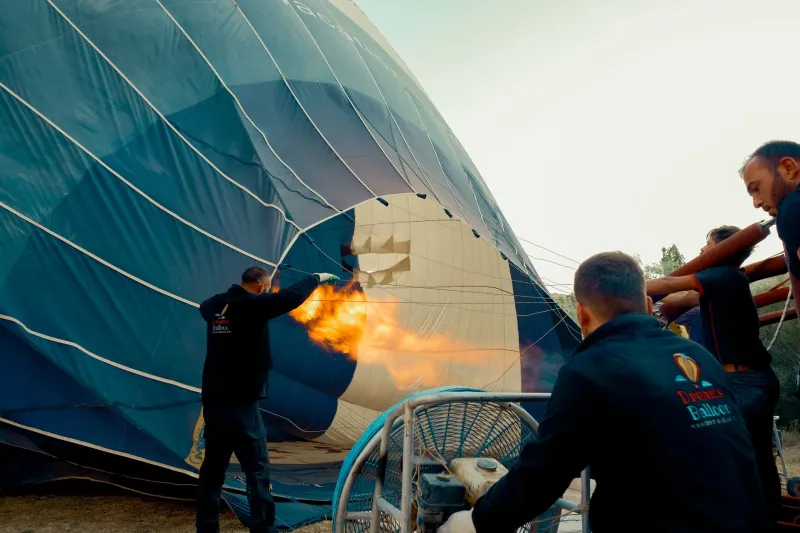
The balloon itself — technically called the envelope — is where a lot of the modern innovation lives. Contemporary envelopes are typically made from ripstop nylon or polyester, materials engineered specifically for high-stress, high-temperature environments. The fabric is coated with a heat-resistant layer that allows it to handle the intense radiant heat generated by the burner system without degrading.
Modern envelopes are designed with significant redundancy built in. The load tapes — vertical and horizontal webbing strips sewn into the fabric — distribute stress across the entire structure rather than concentrating it at any single point. This means that even if a small section of fabric were somehow compromised, the structural integrity of the balloon is maintained. Manufacturers subject envelopes to rigorous testing before they ever see a passenger, including inflation cycles, load testing, and UV exposure assessments.
Envelopes also have a finite operational lifespan, measured in flight hours. Commercial operators track this carefully, and balloons that have reached their certified limits are retired from passenger service. It's a system not unlike aircraft maintenance schedules, and it's overseen by the FAA.
The Burner: Controlled Fire Is Still Controlled
The propane burner system is probably the element that makes first-timers most nervous, and it's also one of the most robustly engineered components of the whole setup. Modern balloon burners operate at extremely high efficiency, delivering intense heat in short, controlled blasts that the pilot uses to manage altitude. The fuel is stored in stainless steel or aluminum cylinders within the basket, each equipped with pressure gauges, shutoff valves, and safety mechanisms.
Pilots train extensively on fuel management — understanding how temperature, humidity, and altitude affect burn efficiency is a core part of certification. Experienced balloon pilots can tell you almost exactly how much fuel a flight will consume before they leave the ground, which is not the work of guesswork. It's the product of hundreds of hours in the air and a deep understanding of thermodynamics.
Dual burner systems are standard on most commercial passenger balloons, meaning that if one burner experiences any kind of issue, the pilot has an immediate backup. Redundancy is the recurring theme throughout the whole aircraft.
FAA Certification: More Rigorous Than Most People Assume
Hot air balloon pilots operating commercially in the United States are required to hold an FAA commercial pilot certificate with a free balloon rating. Getting there is not a weekend course. Candidates must log a minimum number of flight hours, pass written knowledge exams, complete a practical flight test with an FAA examiner, and demonstrate proficiency across a range of weather conditions and flight scenarios.
Beyond pilot certification, the balloons themselves are certified as aircraft. Each balloon must carry an FAA airworthiness certificate, and commercial operators are required to maintain detailed maintenance logs. Annual inspections are mandatory, and any significant repair or modification requires FAA-approved documentation.
The Balloon Federation of America (BFA) also provides additional training resources and safety guidelines that many operators follow above and beyond the federal minimums. The culture within the professional ballooning community tends to be genuinely safety-first — pilots talk to each other, share information about conditions and incidents, and generally operate with a level of mutual accountability that's built into the fabric of the industry.
Weather: The Variable That Commands the Most Respect
If there's one area where balloon safety protocols are most visibly different from other aviation activities, it's weather decision-making. Hot air balloons are highly sensitive to wind, rain, and temperature inversions. Experienced pilots and festival operators treat weather not as an inconvenience but as the primary operational variable that determines whether a flight happens at all.
Professional balloon pilots use multiple weather data sources — including on-site wind meters, National Weather Service forecasts, and pilot weather balloons called pibal launches — to assess conditions before any passenger flight. If the winds are too strong, too unpredictable, or shifting in ways that create risk, the flight doesn't go. Period.
At festivals, this means you may occasionally see scheduled launches postponed or cancelled due to weather, and that's actually a feature, not a bug. The willingness of operators to make conservative calls is one of the clearest signals that safety culture is genuine rather than performative. Chase crews on the ground maintain radio contact with pilots throughout every flight, ready to coordinate landing zones and assist with retrieval.
What 2024 Looks Like: Technology Adds Another Layer
Modern balloon operations have benefited from the same technological improvements that have transformed aviation broadly. GPS tracking is now standard, allowing chase crews and festival coordinators to monitor balloon positions in real time. Digital weather apps with hyperlocal data have improved preflight planning significantly. Some operators are beginning to explore lightweight composite materials for basket construction that offer improved strength-to-weight ratios.
Communication technology has also improved the safety picture. Pilots carry multiple communication devices, and the coordination between airborne pilots and ground crews during festival mass ascensions — where dozens or even hundreds of balloons share the same airspace — is a carefully choreographed process managed with modern radio systems and established visual protocols.
So Should You Go?
The short answer is yes, absolutely. The longer answer is that the nervousness you might feel before your first balloon flight is a completely natural response to something that looks unfamiliar and a little audacious. But the more you understand what's actually happening — the engineering, the training, the regulatory structure, the weather protocols — the more that nervousness tends to shift into something closer to genuine excitement.
At Sky Rise Festivals, we connect you with reputable, vetted events where safety culture is built into everything from the equipment to the people running the operation. The sky isn't something to be afraid of. With the right preparation and the right team, it's something to be celebrated.